Overpopulation
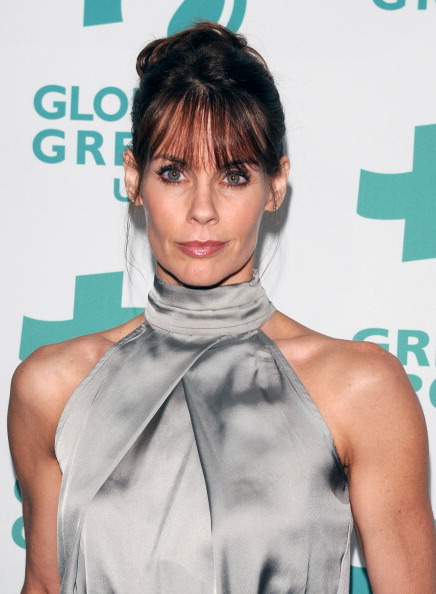
Alexandra’s TEDx Talk on Overpopulation
Click here for my favorite video on overpopulation, which gives the best overview on how darn fast the number of people on earth is growing. Start at 1 minute 30 seconds because the intro is boring. Believe me, the end is not boring at all!
I believe that human overpopulation is the biggest issue we face today. When I was born, the world population was 3 billion people. Now, 48 years later, the world population has more than doubled to 7 billion. Environmentally, we cannot make real strides unless we deal with the enormous number of people added to the planet daily. It disappoints me that environmental organizations don’t put “have 2 or fewer children per couple” on their "Things you can do" lists to save the rainforest or wildlife, preserve clean air and water, stop soil erosion, ensure enough open space and arable land on the planet for our grandchildren – you name the environmental issue, and if the population continues to rise as quickly as it is now, there is no way we are going to be able to solve these issues.
Unfortunately, talking about how to stabilize the world’s population freaks organizations out – they worry they will alienate their donors if they mention it. People immediately think stabilizing (or even lowering) global human population means abortions everywhere and taking away people’s rights to have as many kids as they please. This is not true. Although I come from the school of thought that believes that an ideal world population is 2 billion people, even that more radical idea doesn’t mean that there will have to be draconian rules governing our private lives and our decisions about our families. The most efficient, fastest way to lower population is to educate women around the world. There is a direct correlation to the number of years a girl spends in school to the number of children she will have. This is because the more empowered a woman is, the fewer children she will choose to have no matter what her husband wants (men tend to want larger families than women, because they don’t have to raise the kids), and she will be more likely to use birth control. Another way to lower the number of children per family is to eradicate poverty: the more money a family has, the fewer children they have (it sounds paradoxical, but it is true).
Having said that, I am open to incentives for smaller families. Forcing someone to have fewer kids, can have terrible backlashes, as happened in China, when, in the 1970’s to avoid famine, the government insisted on only one child per family. Unfortunately, in their culture boys are more valuable than girls (girls get married off into another family and cant take care of their aging parents and there is no social security system in China other than your kids supporting you), so if a couple’s only child was a girl, well, they would often abandon her, or let that baby languish and die, so that they could try again for a boy. Abortions were being performed if the fetus was female. Although I believe that China had no other choice than to make strict childbearing rules to avoid the deaths of millions of citizens, if China had had more foresight they would not have had to impose such drastic laws, and instead could have encouraged smaller families over many generations, so that the culture could adapt.
A lot of folks say that these issues do not involve the United States, because our population is only growing 1% a year, and while we have an average of 2 kids per family, other countries, like Kenya for example, have an average of 5 kids per family. But although the US accounts for less than 5% of the world’s population, we produce 25% of all the greenhouse gas emissions, use 25% of the world’s energy. In 50 years, the US will add 114 million people and Africa will add 1.2 billion people, yet the carbon emission for those 114 million Americans will be the same as that of Africa’s 1.2 billion citizens! Americans live so wastefully that one American uses the same amount of resources as 30 people from India! So when you talk about population, you are not only discussing literal numbers of people, you are also talking about how many resources each of these people use up. And in America, we use more resources than anyone else in the entire world. If everyone lived like the average North American (and everyone wants to, don’t they?), we would need 4 more Earths to provide them all with food, water, space, nice houses, cars, electronics, etc – everything you and I take for granted every day. It is horrible to think that we are literally taking resources out of the hands of billions of people because of our consumptive lifestyle here in the US, but that is what we are doing. The truth is, that if everyone wanted to live a good life (not as “good” as here in America, but let’s say how they live in France, which is half as wasteful as in the US), the earth’s population would have to be 1/3 what it is now, at 2 billion people.
And it is not only nature that is affected by a fast-growing population. A high birthrate means a struggle to keep up with traffic problems, enough schools to educate kids and enough parks for them to play in. It means more unrest and racism as more people compete for jobs. It means more wars, as countries need more resources to provide for their citizenry. It means a lower quality of life for all.
THINGS YOU CAN DO:
- Just replace yourself: have 2 children or fewer per couple
- Become a vegetarian (It takes 23 times more water to produce 1 ton of beef than it does to produce 1 ton of grain. One acre will feed cattle that will ultimately produce 123 pounds of beef, but that same acre could grow 30,000 pounds of potatoes).
- Buy less! Buy used! (the average American home for a family of four has doubled in size since 1950. Our cars are the biggest in the world, we replace our electronics every few years and our clothes every season, shopping has become a sport!)
TO READ:
China Forcing World to Rethink It’s Economic Future
http://www.earthpolicy.org/Books/PB2/index.htm
FACTOIDS:
- Our world population has grown more since 1950 than it has in the previous four million years. With these additional people come additional demands on our earth: 80% of the original rain forests have been cleared or degraded; one-third to one halfof the Earth’s land surface has been transformed.
- We lose one or more entire species of animal or plant life every 20 minutes—some 27,000 species a year. This rate and scale of extinction has not occurred in 65 million years.
- Currently, 505 million people live in countries with water-stress or waterscarce conditions. By 2025, almost 48% of the Earth’s population–between 2.4and 3.4 billion people–will be living in areas of water stress or scarcity.
- Only 0.3% of the planet’s water is available for human use. Due to mismanagement, over 40% of the groundwater in the U.S. is contaminated by industrial, agricultural, and household pollution, making it extremely difficult and costly to purify.
- Americans are only 5% of the world’s population, yet we consume 25% of the world’s resources
- Six million acres of prime farmland—an area the size of Vermont—were lost in the United States alone between 1982 and 1992. Four of those six million acres were usurped by urban and suburban expansion. The other 2 million acres were lost through erosion caused by deforestation, unsustainable farming practices, and animal over-grazing.
- While the number of people living in 58 US metropolitan areas rose 80% between 1950 and 1990, the land covered by those areas expanded 305%.
- One U.S. citizen consumes about 30 times as much as a citizen of India. If everyone on earth lived like the average North American, it would require four more earths to provide all the material and energy.
POPULATION WEBSITES:
- United Nations Population Fund http://www.unfpa.org
- United Nations Population Division http://www.undp.org/popin/
- U.S. Census Bureau http://www.census.gov
- Alan Guttemacher Institute http://www.agi-usa.org
- Diversity Alliance for a Sustainable America http://www.diversityalliance.org
- Numbers USA http://www.numbersusa.com
- Negative Population Growth (NPG) http://www.npg.org
- Planned Parenthood Federation http://www.plannedparenthood.org
- Planned Parenthood International http://www.ippf.org
- Population Action International http://www.populationaction.org
- Population Coalition http://www.popco.org
- Population Communications International http://www.population.org
- Population Council http://www.popcouncil.org
- Population Institute http://www.populationinstitute.org
- Population Media Center http://www.populationmedia.org
- Population Reference Bureau http://www.prb.org
- World Overpopulation Awareness http://www.overpopulation.org
- Zero Population Growth (ZPG) http://www.zpg.org
US STATE AND REGIONAL POPULATION ORGANIZATIONS:
- Californians for Population Stabilization http://www.cap-s.org
- Floridians for a Sustainable Population http://www.flsuspop.org
- New England Coalition for Sustainable Population http://adam.cheshire.net/~d9cat/necsp.html
- Vermont Population Alliance http://www.vtpop.org
POPULATION AND ENVIRONMENT WEBSITES:
- United Nations Environment Program (UNEP) http://www.ourplanet.com
- Audubon Population & Habitat Program http://www.audubonpopulation.org
- The Earth Times (newspaper) http://www.earthtimes.org
- ECO Future http://www.ecofuture.org/populat.html
- Environmental News Network http://www.enn.com
- Population & Environment (books, periodicals and children’s literature) http://egj.lib.uidaho.edu/egj02/groat01.html
- Population/Health/Environment site http://www.popplanet.org
- National Wildlife Federation http://www.nwf.org/nwf/international/pop/
- Sierra Club Population Program http://www.sierraclub.org/population/
Thank you for the Population Coalition for the list of organizations and links!
Alexandra’s Activism
Watch a clip of JamPacked, a documentary that Alexandra co-wrote and produced, about overpopulation.